Sub-Zero Refrigerator Maintenance — The Complete Owner's Guide
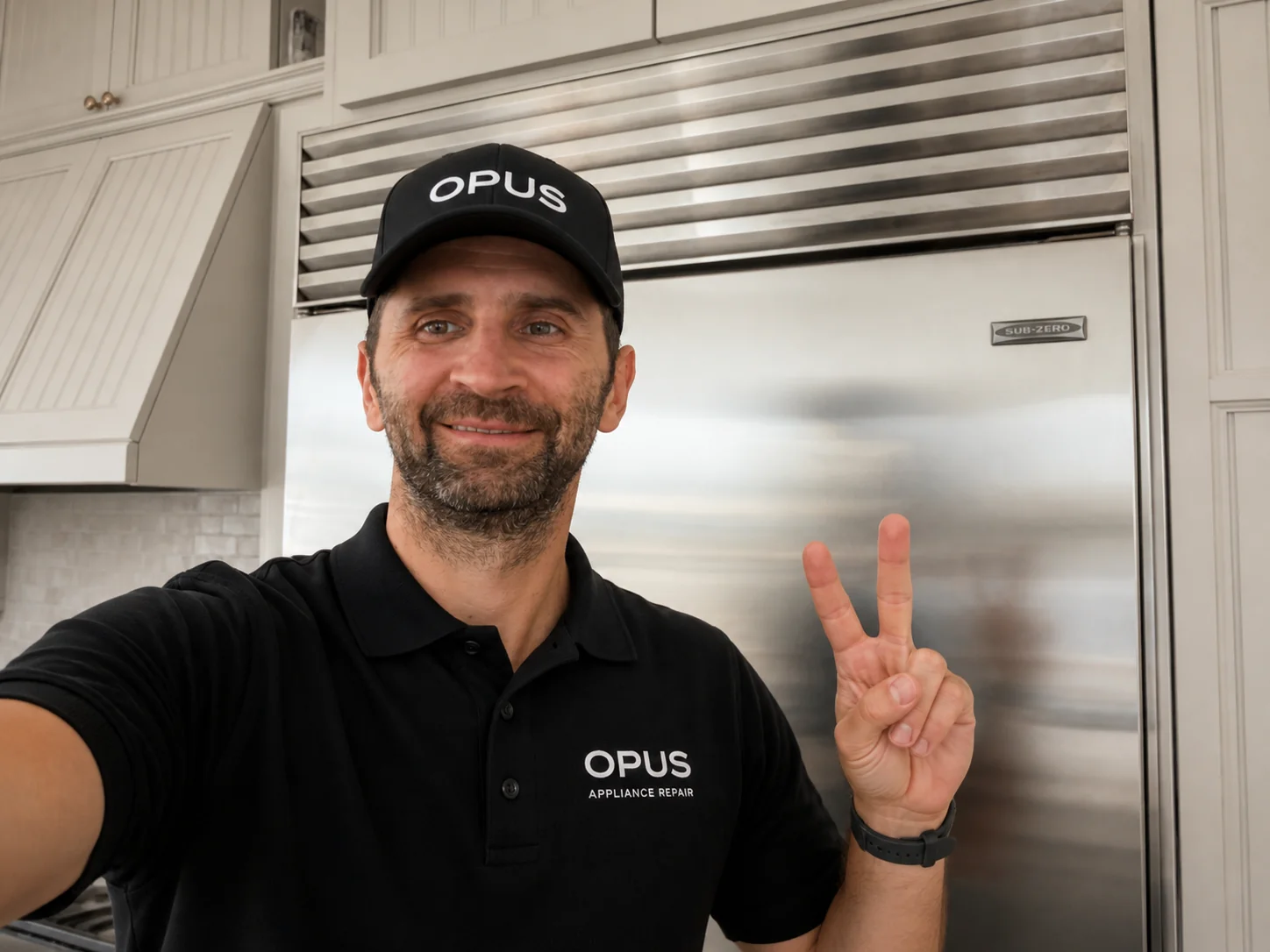

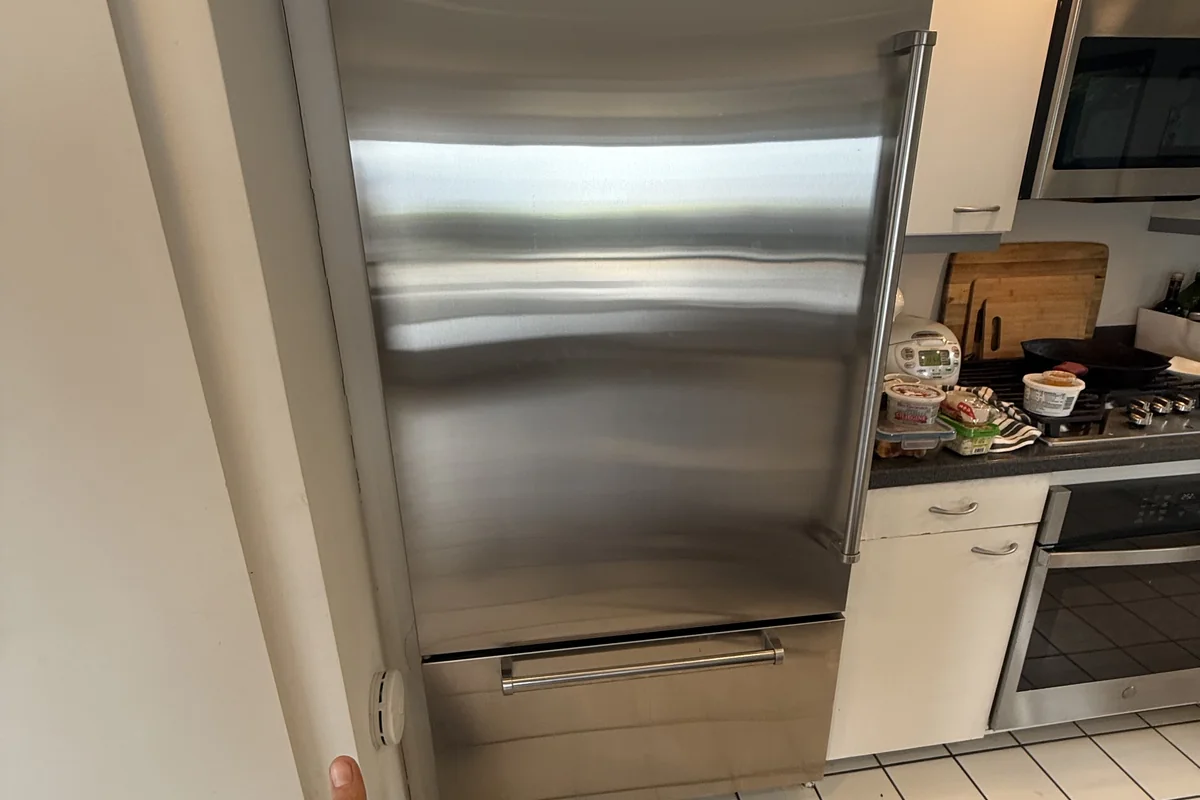
Routine Sub-Zero maintenance: condenser-coil cleaning, technician on-site, and door-gasket inspection.
Why Sub-Zero Refrigerator Maintenance Matters
<a href="/brands/sub-zero">Sub-Zero</a> refrigerators are built to last 20+ years, but only with proper maintenance. Neglecting basic upkeep is the number one cause of expensive repairs and premature failure. The good news? Sub-Zero maintenance is straightforward. With a few simple tasks spread throughout the year, you can keep your unit running at peak performance and avoid service calls.
In this guide, we'll walk you through every maintenance task your sub zero refrigerator needs—from cleaning condenser coils to replacing air filters and caring for door gaskets. These aren't complicated procedures; most take less than 30 minutes.
A quick perspective on the cost math: a well-maintained Sub-Zero will run roughly 20-25 years, with typical service calls limited to a few wear items like gaskets, air filters, and the occasional relay. A neglected one rarely makes it past 12-15, and the compressor — the single most expensive component in the unit — is usually what finally gives up. Replacing a sealed system on a built-in 648PRO is a $2,000-$3,000 job. Cleaning coils once a year takes 20 minutes and costs nothing. The ratio speaks for itself.
Common Sub-Zero Models Covered by This Guide
The maintenance steps below apply to virtually every built-in and integrated Sub-Zero refrigerator sold in the last two decades. If you own one of these, this guide is for you:
Regardless of model, the five maintenance tasks below are the backbone of Sub-Zero longevity. The manufacturer's service literature is unanimous on this point.
- Classic Built-In (BI series): BI-30, BI-36, BI-42, BI-48 — the workhorse side-by-side and over-and-under configurations found in most San Diego kitchens.
- Pro 48 / 648PRO / 685: dual-compressor 48-inch built-ins. Two independent sealed systems means two sets of condenser coils to clean.
- Designer series (700-series): 736TR, 736TRI, 727R, 700TR — modern integrated column configurations that disappear into cabinetry. Maintenance access is usually via a front kick-plate.
- Undercounter (UC-15, UC-24): beverage centers, wine units, ice makers. Smaller but still benefit from the same coil-cleaning and gasket-care schedule.
- Integrated column (IC and IW series): fresh-food columns, freezer columns, and wine columns installed side by side. Condenser location varies by install, so check your owner's manual.
How to Clean Sub-Zero Condenser Coils
This is the MOST important sub zero refrigerator maintenance task. Condenser coils dissipate heat, allowing your compressor to work efficiently. When dust buildup clogs the coils, the compressor has to work harder, consuming more energy and generating heat that can damage electrical components.
Why it matters: Dirty condenser coils are the leading cause of refrigerators running warm, high energy bills, and compressor failure.
How often: Every 6–12 months (every 6 months if you have pets or a dusty kitchen).
Step-by-step:
Pro tip: Built-in Sub-Zero models often have top-mounted or rear-mounted condensers that are surprisingly easy to access. Check your owner's manual for the exact location on your model.
What happens if you skip this: coil buildup is the single biggest driver of compressor replacement on Sub-Zero units older than 10 years. A half-inch of dust on the coils can cut cooling capacity by 30% and push internal compressor temperatures past design limits. The compressor runs longer, works harder, and eventually the start winding or the sealed system gives up. At that point you are looking at $1,500-$3,000 in parts and labor, versus the 20 minutes it takes to vacuum the coils twice a year.
- Unplug the unit or turn off the breaker (never skip this step)
- Locate the condenser coils. On most Sub-Zero models, they're either at the bottom behind a removable grille or at the rear of the unit
- Remove the grille or access panel—usually 2-4 screws
- Use a condenser coil brush (Sub-Zero sells them, or any refrigerator coil brush works). Gently brush the coils in multiple directions to dislodge dust
- Vacuum the loose debris with a soft brush attachment on your vacuum
- Reinstall the grille and plug the unit back in
Replacing the Air Purification Filter
Sub-Zero units include an air purification cartridge that absorbs ethylene gas and odors, keeping food fresh longer. This cartridge has a limited lifespan and needs regular replacement.
When to replace: Every 12 months (Sub-Zero recommends annually, regardless of use).
How to replace:
Part numbers vary by model, so check your owner's manual or call us for the correct replacement. We always stock OEM Sub-Zero filters.
- Locate the air purification cartridge—usually upper right interior on fresh food compartment
- Pull the old cartridge straight out (it may be tightly seated; gentle pressure is fine)
- Slide the new cartridge into the same slot until it clicks or seats firmly
- Close the door and you're done
Door Gasket Care and Inspection
Door gaskets seal the compartments to maintain temperature and prevent frost buildup. Over time, they can crack, warp, or lose elasticity, allowing cold air to escape and hiking your energy bills.
Monthly cleaning:
Annual inspection (dollar bill test):
What a failing gasket costs you: a compromised seal typically adds 15-25% to your monthly electric bill because the compressor runs longer to maintain temperature. It also causes frost buildup on the freezer side and humidity issues on the fresh-food side, both of which shorten the lifespan of other components. Gasket replacement is one of the lower-cost repairs we do — typically completed in under an hour, quoted in writing after the $90 diagnostic. Left alone for a year, the same slack gasket can contribute to compressor failure, which is an order of magnitude more expensive.
- Wipe gaskets with warm water and mild soap (a damp cloth works fine)
- Dry thoroughly with a soft cloth
- Never use harsh chemicals, bleach, or abrasives—they degrade the rubber
- Close the door on a dollar bill—half inside, half outside
- Try to pull the bill out. If it slides out easily, the gasket isn't sealing properly
- Repeat at 6-8 points around the perimeter of each door—gaskets often fail in one corner long before the rest
- If the seal is weak, contact us. Gasket replacement is quick and prevents larger problems
Temperature Settings and Calibration
Sub-Zero refrigerators should maintain steady temperatures: 38°F in the fresh food compartment and 0°F in the freezer. Temperature swings can damage compressors and spoil food.
Ideal settings:
If temperatures drift:
Thermometer test: Place a glass of water inside the fridge for 24 hours, then check the temperature with a separate thermometer. This gives you an accurate reading of actual compartment temperature.
- Fresh food: 38°F
- Freezer: 0°F
- First, check that condenser coils are clean (covered above)
- Ensure vents in the fresh food compartment aren't blocked by food
- Try recalibrating using your unit's control panel—instructions are in your owner's manual
- If temperatures still won't hold, contact us. This may indicate an evaporator fan issue or thermostat problem
When to Schedule Professional Sub Zero Maintenance
While homeowners can handle coil cleaning and filter replacement, certain maintenance tasks require professional expertise. OPUS recommends an annual professional maintenance visit to catch issues early and keep your unit running optimally.
Call for professional service if you notice:
OPUS offers sub zero refrigerator service including professional condenser cleaning, full system diagnostics, and preventive maintenance. Every visit starts with a $90 diagnostic fee (applied toward your repair). All work is backed by our 90-day guarantee.
- Unusual noises (compressor humming excessively, clicking, or cycling rapidly)
- Temperature won't hold steady—compartments running warm or too cold
- Frost buildup on evaporator coils or inside compartments
- Condenser cycling too frequently (on/off every few minutes)
- Water pooling at the bottom or leaking from the unit
Sub-Zero Refrigerator Maintenance Schedule at a Glance
Keep this checklist handy to stay on top of sub zero refrigerator maintenance:
- Monthly: Wipe door gaskets, check for unusual noises or temperature swings
- Every 6 months (or quarterly if you have pets): Clean condenser coils with coil brush and vacuum
- Annually: Replace air purification filter, professional system inspection
- Every 2-3 years: Evaluate door gasket condition (dollar bill test), consider water filter replacement if applicable
Key Maintenance Takeaways
- Condenser coil cleaning: Most critical task. Every 6-12 months.
- Air filter replacement: Annually for optimal freshness.
- Door gasket care: Monthly wipe, annual dollar bill seal test.
- Temperature monitoring: Check monthly; 38°F fresh food, 0°F freezer.
- Professional service: Annual maintenance recommended. $90 diagnostic fee applied toward repairs.
- Warranty protection: All OPUS repairs backed by 90-day guarantee. Since 2016.
Maintenance Notes That Apply Beyond Sub-Zero
Most of the maintenance discipline above — condenser coil cleaning, gasket inspection, air filter replacement — applies to every high-end built-in refrigerator brand we service. <a href="/brands/thermador">Thermador</a> Masterpiece units have the same coil-cleaning schedule. <a href="/brands/viking">Viking</a> Designer column refrigeration uses similar air filter cartridges. <a href="/brands/miele">Miele</a> integrated columns share the same gasket-failure pattern at year 7-10.
Where it diverges: <a href="/brands/u-line">U-Line</a> undercounter units have a different sealed-system maintenance interval (smaller condensers run hotter, so 6-month cleaning is the baseline). <a href="/brands/bosch">Bosch</a> 800-series freestanding refrigerators have a self-clean evaporator cycle that reduces frequency of manual intervention. Our <a href="/refrigerator-repair-san-diego">refrigerator repair</a> service covers maintenance and diagnostic across <a href="/areas/la-jolla">La Jolla</a>, <a href="/areas/rancho-santa-fe">Rancho Santa Fe</a>, <a href="/areas/del-mar">Del Mar</a>, and <a href="/areas/coronado">Coronado</a>.
Sub-Zero Maintenance At-a-Glance
- Condenser coils: Clean every 6 months
- Air purification filter: Replace yearly (light flashes red)
- Door gaskets: Wipe monthly, inspect quarterly
- Water filter (if applicable): Replace every 6 months
- Professional service: Every 2-3 years for built-ins
- Lifespan with care: 20+ years (vs ~12 without)
Related Reading
If your Sub-Zero already has issues beyond what maintenance can solve, these companion guides cover the most common follow-ups.
- Sub-Zero Refrigerator Repair in La Jolla — Case Study
- KitchenAid Refrigerator Not Cooling: Fixes
- Refrigerator Repair San Diego — Brand & Pricing Coverage
- Sub-Zero Repair Service — Factory-Certified Technicians
- Appliance Repair in La Jolla — Local Service Coverage
- Sub-Zero owner resources & official documentation (manufacturer) ↗
- Ice Maker Repair San Diego — Sub-Zero UC-15I & Undercounter Units
- Wine Cooler Repair San Diego — Temperature Stability Service
If your Sub-Zero is already showing signs of trouble — temperature swings, unusual noise, ice buildup — maintenance alone won't fix component-level faults. Our factory-certified technicians complete most Sub-Zero refrigerator repairs same-day. Flat $90 diagnostic credited toward the repair, 90-day guarantee on parts and labor.
(858) 788-7973